The Dynamic Brain: From Structural Scaffolds to Embodied Rhythms Across the Lifespan
Dynamic brain activity emerges from the interplay of multiple factors: the structural and neurochemical scaffolds that constrain regional dynamics, the rhythmic influences of bodily signals such as respiration and arousal, and the gradual reorganization of these processes across the human lifespan. In this talk, I will discuss how micro-architectural features—including cytoarchitecture, neuromodulatory receptor landscapes, and gene expression—provide a powerful blueprint for local brain activity. Building on this foundation, I will present evidence that slow bodily rhythms, particularly breathing and arousal fluctuations, rhythmically modulate cortical excitability, perception, and excitation-inhibition balance, and that these rhythms themselves interact. Finally, I will highlight how lifespan changes reshape these dynamics, with temporal autocorrelation emerging as a robust marker of brain aging. Together, these findings motivate a shift toward a unified framework of brain-body states, where neural activity is understood as nested trajectories across timescales—from fast oscillations to bodily rhythms to the slow progression of aging.
Biography
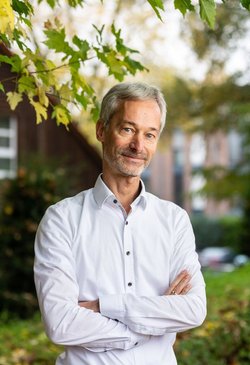
Professor Joachim Gross is Director of the Institute for Biomagnetism and Biosignal analysis at the University of Muenster, Germany. His research focuses on the role of brain rhythms in brain function and dysfunction. In addition, he is interested in the interaction between body and brain rhythms and their change in health and disease. He uses MEG,EEG and neurostimulation techniques and is involved in the development and application of smartphone-based sensing devices for digital phenotyping. In the past 20 years he has published more than 200 papers in international journals including Nature Reviews Neuroscience, Neuron, TICS, PloS Biology, Current Biology, PNAS, and leading domain specific journals. His work has been cited in over 30000 articles (h-index 82; Google Scholar). He currently holds 7 DFG grants including a 1.25M€ Koselleck grant.